How high-rail excavators support rail infrastructure work
Rail infrastructure work often takes place in restricted environments where access, track gauge, timing, and equipment choice must be carefully coordinated. High-rail excavators are designed to operate in these conditions by combining conventional excavation functions with rail-compatible running gear. This allows one machine to support a range of tasks within or beside the rail corridor.
This guide explains how high-rail excavators are used, what makes them different from standard civil plant, and what information project teams should prepare before mobilisation. For FrostWorks equipment details, explore our high-rail infrastructure services.
What is a high-rail excavator?
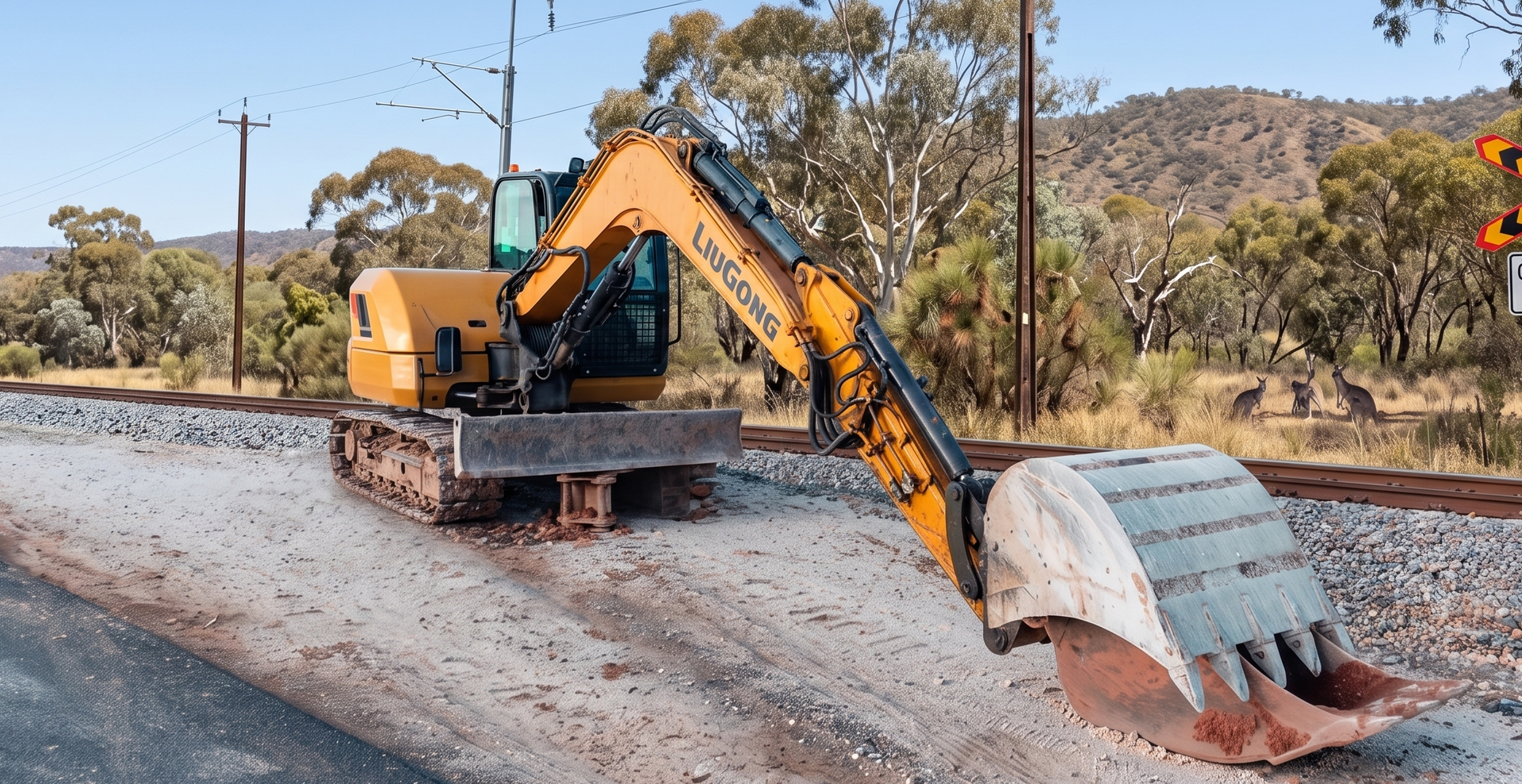
A high-rail excavator is an excavator fitted with equipment that allows it to travel and operate on railway tracks as well as conventional ground surfaces. Depending on the machine, this may include rail wheels, gauge-adjustment systems, braking equipment, and controls designed for rail environments.
The excavator still performs familiar tasks such as digging, lifting, handling materials, clearing vegetation, and supporting drainage work. The difference is its ability to access work fronts along the track where standard road-going or tracked plant may not be able to travel efficiently.
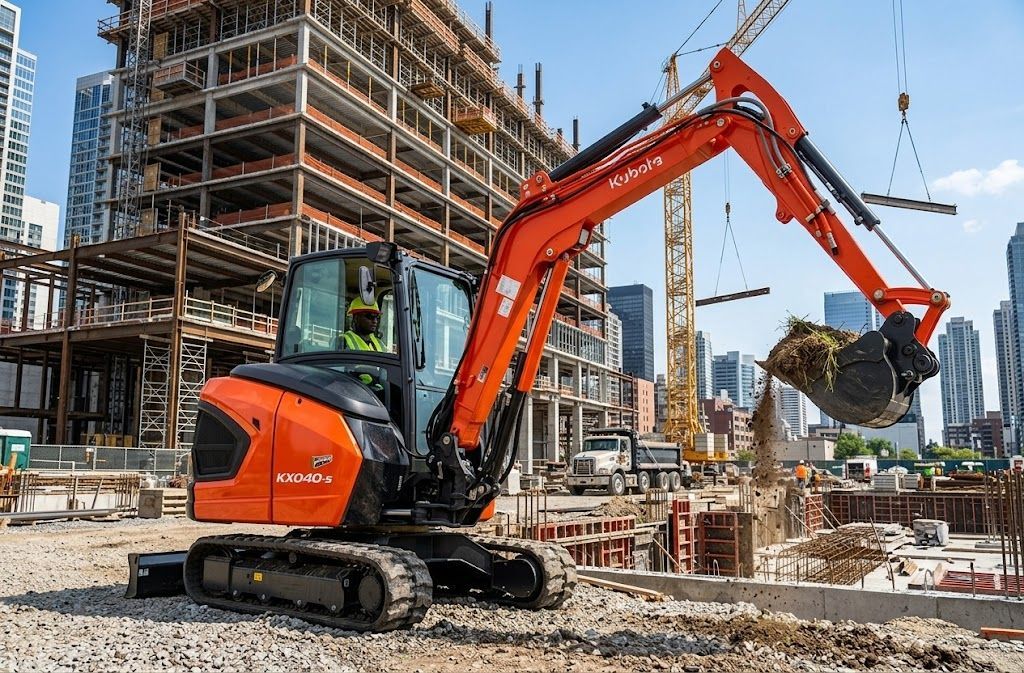
FrostWorks operates two 4-tonne high-rail Kubota KX040 excavators and a 14-tonne wheeled high-rail excavator with adjustable multi-gauge operation. This provides options for different access conditions, task sizes, and rail environments.
Where high-rail excavators are used
High-rail machines can support maintenance, construction, shutdown, possession, and corridor works. The exact task depends on the project scope, attachments, site controls, and rail access arrangements.
- Rail corridor excavation and earthworks
- Drainage and trenching beside or beneath the track
- Vegetation clearing and slashing
- Material handling and placement
- Ballast and formation-related support
- Access preparation and civil works near rail infrastructure
Because the machine can move along the track, it may reduce the need for repeated off-track repositioning in suitable environments. However, each project still requires careful planning around access points, track conditions, work limits, and the wider rail safety system.
Why gauge and access details matter
Rail projects can involve different track gauges and operating conditions. A machine must be compatible with the specific rail environment before it is mobilised. The adjustable multi-gauge operation of the FrostWorks 14-tonne wheeled excavator provides flexibility for suitable projects, but compatibility still needs to be confirmed against the project details.
Access is equally important. The project team should identify where the machine will enter and leave the rail corridor, how it will be transported to site, and whether there is sufficient space for loading, unloading, and positioning.
Restrictions may also apply to nearby services, structures, platforms, overhead infrastructure, bridges, crossings, or confined work areas. Accurate drawings, photos, and site information help the equipment provider assess these conditions before arrival.
Plan around the rail work window
Rail work is often completed within tightly controlled windows. Possessions, shutdowns, maintenance periods, and coordinated access can limit the time available for mobilisation and productive work. Equipment should therefore be selected and prepared around the specific task rather than treated as a general plant booking.
Provide the expected work sequence, operating hours, access times, and any dependencies on other crews. This allows the supplier to consider transport, machine preparation, attachments, operator requirements, and the order in which tasks need to be completed.
Where the project includes excavation or drainage beyond the immediate rail task, FrostWorks can also coordinate civil excavation services and drainage and pipeline support.
Choose attachments for the actual task
The excavator is only one part of the setup. Buckets, grabs, lifting attachments, mulchers, slashers, and other tools may be needed depending on the work. Selecting attachments early helps confirm machine suitability, transport requirements, and the likely work method.
Vegetation management is a common example. Rail corridors can require clearing or ongoing control to maintain access and visibility. Learn more about our mulching and slashing services for civil and rail environments.
Attachment weight and dimensions may also affect transport and operating limits. They should be included in the project brief rather than added after the machine has already been scheduled.
Information to provide before mobilisation
A useful high-rail enquiry should include:
- Project location and rail environment
- Track gauge and relevant corridor details
- Required tasks and estimated work volume
- Access, loading, and unloading points
- Possession, shutdown, or work-window timing
- Required attachments
- Site induction and project-specific requirements
- Supporting excavation, drainage, vegetation, haulage, or plant needs
The Office of the National Rail Safety Regulator provides national rail safety information and guidance for rail transport operators and industry participants. Project teams should ensure their own responsibilities, approvals, and rail safety arrangements are confirmed for the work being planned.
Coordinate the machine with the wider scope
High-rail equipment is most effective when the machine, operator, attachments, transport, and work sequence are considered together. A detailed brief gives the supplier enough information to assess suitability and identify questions before the project reaches the mobilisation stage.
Explore our specialist high-rail fleet and related civil services. To discuss gauge, access, attachments, location, and project timing, contact the FrostWorks team.